
A Need for Enforcement
For nearly a century after the Civil War, Jim Crow laws denied housing to non-white Americans. Restrictions written into property deeds, racially exclusive home insurance maps, zoning codes – these and many other policies and practices, laws and customs, separated Black and Brown Americans from safe, stable housing.
With the signing of the Fair Housing Act in 1968, seven days after the murder of Dr. Martin Luther King, Jr., this civil rights law — long called for by King and other advocates — finally made housing discrimination illegal.
But discrimination didn’t stop, not least because the Fair Housing Act provided no way of guaranteeing its protections.
This is where we stepped up, and stepped in.
HOME Begins
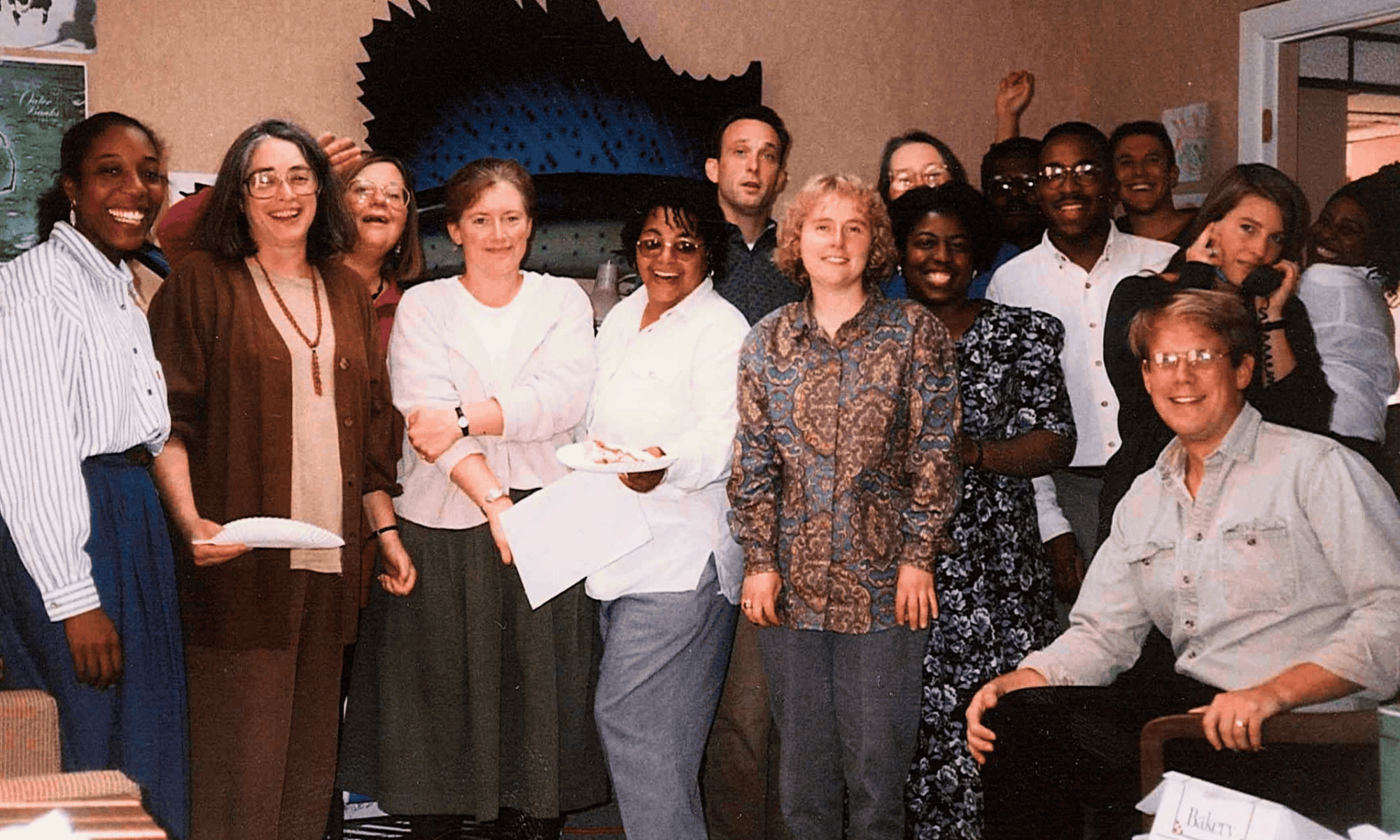
Housing Opportunities Made Equal filed articles of incorporation in September 1971. The founders shared a conviction: if the federal government would not enforce laws protecting equal access to housing, then they would do so in Virginia. The Commonwealth’s first fair housing organization began its work.
With initial donations as modest as $25, founding board members rallied neighbors to the cause. The mission they set then hasn’t changed since: HOME works to ensure equal access to housing for all.
Pioneering, and Setting Precedent
While the Fair Housing Act lacked a lever for enforcement, its language offered HOME an opening. The law made it illegal “to represent to any person because of race, color, religion, or national origin that any dwelling is not available for inspection, sale, or rental when such dwelling is in fact so available.” The words “any person” would prove key.
In 1970s Richmond, it was common for a Black resident to visit an apartment in search of a home and hear that nothing was available, while a white person could make the same inquiry and be offered a tour. “Whites only” real estate signs had receded in Richmond, but an informal practice known as steering shaped who could live where. HOME staff knew this all too well — some had experienced it first-hand.
Starting in 1971, we sent matched pairs of Black and white testers — individuals posing as prospective renters or homebuyers — to apartment complexes around Richmond. Then we compared their treatment. The first tests were prompted by community members who felt they had experienced discrimination; HOME’s testers and investigators did the slow, careful work of finding out.
HOME’s first executive director, Barbara Wurtzel Rabin, had read the Fair Housing Act closely. She worked with attorneys, pushing to see how the new and untested law might be used to change the status quo. And she took steering as her target.
In 1978, Rabin directed a coordinated series of 59 tests at apartment complexes across the Richmond region. Not yet an attorney herself, she nonetheless framed a novel legal argument. When testers were unfairly turned away, she reasoned, they fit the definition of “any person” the Fair Housing Act protected from harm. And HOME had been harmed, too, our resources diverted by the discrimination we were forced to confront. A fair housing organization, in other words, could sue in its own name, without requiring a harmed individual to endure years of litigation in search of justice.
Rabin’s vision, argued by attorney Vanessa Ruiz, eventually reached the US Supreme Court, which ruled unanimously in HOME’s favor in 1982. Havens Realty Corp. v. Coleman is the reason fair housing groups across the country can bring cases at all, and courts still cite it every day.
Taking On Industries
HOME soon applied testing to one industry after another.
In 1987, Saunders v. General Services Corporation became the first fair housing case argued over discriminatory advertising. A management company’s brochures featured more than 300 people, only six of them non-white. During the legal process of discovery, HOME found photographs of a swimming pool annotated with instructions to keep Black swimmers out of the images. The court ruled against the company, national press followed, and within a year the industry had begun representing Black and Brown renters in its ads.
In the late 1990s, HOME turned to homeowners insurance. Investigators sent matched pairs to inquire about comparable houses in comparable neighborhoods — one majority Black, one majority white. Before long, they had documented redlining: Nationwide was refusing to insure properties in majority Black areas. And given that mortgage providers will not write a loan for an uninsured home, this practice had the effect of shutting out prospective buyers, most of whom were Black. In 1998, a Richmond jury returned a verdict of $100.5 million — at the time, the largest sum for damages in a civil rights case in US history. After appeal, the case settled for $17.5 million in 2000. Insurance practices changed across the country.
Discrimination Adapts, and So Do We
With each victory, we learned a similar lesson: discrimination doesn’t disappear. It changes shape.
Two fights in the early 2000s made this especially clear. In 2005, Nealie Pitts saw a “for sale” sign on a Chesterfield County house and inquired. The owner told her he couldn’t sell to her because she was Black — the neighbors, he said, had decided to keep the area white. HOME sent testers who confirmed her account, while the seller cited a deed restriction against selling to Black buyers. Restrictive covenants like this one were once widespread, and though they have been unenforceable since 1948, the Pitts case made clear that their continued presence on deeds can create openings for discrimination. A court ruled for Ms. Pitts, and the message carried well past Chesterfield.
Then in 2008, when the financial crisis hit, predatory “foreclosure rescue” operations targeted elderly and Black homeowners. HOME led a campaign that outlawed them in Virginia, and then worked with partners across the state to pass the 2009 Trust in Lending Act, requiring mortgage brokers to act in borrowers’ interests.
Systemic investigations in the following years revealed even more patterns and practices of discrimination. In 2015, HOME’s scrutiny of apartment design and construction produced a $600,000 settlement requiring extensive accessibility retrofits — and put architects and developers on notice to follow federal accessibility laws.
In 2017, HOME investigated regional mortgage lending activity and brought concerns it had about under service in minority communities in the Richmond region to government regulators and subsequently Wells Fargo directly. What followed was a partnership agreement to increase homeownership opportunities and expand mortgage lending to African Americans and African-American neighborhoods in the Richmond metropolitan region — providing over $4 million in financial support to HOME in the form of program support and down payment assistance, and standing as one of the largest agreements ever reached involving a financial institution and an individual fair housing organization. As part of the partnership, HOME worked with Wells Fargo to conduct fair housing compliance testing at Wells Fargo branches and provide other monitoring and training assistance.
And in 2020, after decades of work with partners across the Commonwealth, HOME’s advocacy helped expand Virginia’s Fair Housing Law beyond the guarantees of federal legislation. Today in Virginia, sexual orientation, gender identity, old age, military status, and the source of funds used to pay for housing — such as housing vouchers or veterans’ benefits — are all protected from discrimination.
Looking Ahead
Over the years, our growing work brought another change, as HOME became Housing Opportunities Made Equal of Virginia – the only nonprofit in the Commonwealth dedicated to fighting housing discrimination.
Today, in Richmond and well beyond, our counselors empower Virginians to buy their first homes and prevent foreclosures, while also supporting renters with housing vouchers in finding safe, stable homes. Our investigators still test for discrimination and our attorneys deliver accountability. Our policy team builds power with Virginians affected by housing injustice and brings the experiences of all our clients to lawmakers who can make change.
More than a half century later, the work our founders set in motion continues. New headwinds emerge with each passing year, and discrimination continues to change form. But we remain in the fight.
Dig Deeper
Promises Kept: A Study in Organizational Evolution
Written by Patricia S. Morris and edited by Connie Chamberlin and Mary Samsell, this history was published on the occasion of HOME’s 30th anniversary in 2001.
Videos on HOME of VA’s history
Prefer to watch our history unfold? This playlist of videos, produced for our 50th anniversary celebration in 2021, includes interviews with some of HOME’s founders and key leaders.